Big Blog 1: American Roots Music
Over the course of this class, we have delved into the depths of other cultures and their musics. It has been really intriguing learning about the history and how these different styles and genres of music have developed over the years. Since we have the opportunity to venture out on our own and learn about music related to American roots, I have decided to learn more about African American spirituals.
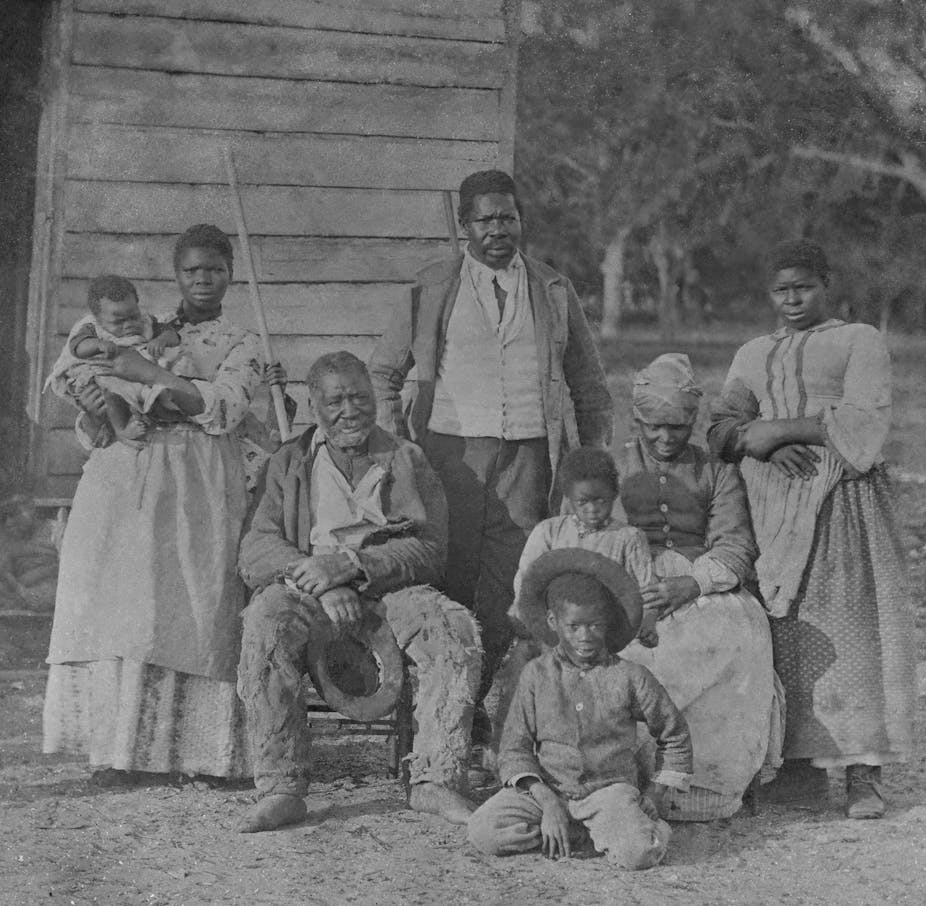

The term spiritual is referred to as a religious folksong that relates and is in correlation to the African American people who were captured and enslaved to the white society of the South. African American Spirituals can also be referred to as Negro Spirituals. This type of music is said to be the largest and most significant form of American folksong. Two of the most famous spirituals were "Swing Low, Sweet Chariot" and "Deep Down in my Heart." It is said that the term "spiritual" comes from the King James Bible translation of Ephesians 5:19. Ephesians 5:19 says, "Speaking to yourselves in psalms and hymns and spiritual songs, singing and making melody in your heart for the Lord." Negro Spirituals came into form and got its roots from the informal gatherings of the African slaves. The slaves would meet inside through "praise houses" and outside through "brush arbor meetings, bush meetings, or camp meetings." Throughout the meetings, the slaves would chant, sing, dance, and do ecstatic trances. The term spiritual can also come from "ring shout". A ring shout is considered a shuffling circular dance to chanting and hand-clapping which was common for the slaves on the early plantations. An example of this would be "Jesus Leads Me All the Way."
Music played an essential role in the lives of the African people. Music was so intricate that it played a significant role in the important life events and daily activities. Unfortunately, the whites of the South were not to keen with the Africans-style way of worship and considered it to be idolatrous and wild. Consequently, the gatherings of the African American slaves were often banned and had to be conducted in a secret manner. Christianity started to make an appearance in the Americas and began to take toll on the lives of the slaves. The slaves were amazed and fascinated with the stories of the Bible which they related in correlation to their own lives. The impact was great and they created spirituals that retold the narratives about figures in the Bible such as Moses and Daniel. The Africans took Christianity and interpreted it so much that it consumed the population. The spirituals were used to express the hopes and sorrows to express the African community's new faith. Spirituals are usually sung in the form of call and response. Call and response consist of a leader improvising a line of text and the rest of the singers providing a refrain in unison.
Vocally, the style was free and included slides. Like many other cultures, it was difficult to document things. Some slave spirituals were known as "sorrow songs". Sorrow songs are seen as melancholic, slow, and intense. The more upbeat songs were seen as "jubilees". Jubilees can be seen as fast, rhythmic, and are sometimes syncopated. Another name for the jubilees are "camp meeting songs". Some examples of sorrow songs were "Sometimes I Feel Like a Motherless Child" and "Nobody Knows de Trouble I've Seen." Some examples of jubilees are "Rock my Soul" and "Fare Ye Well."
Sometimes, Negro spirituals were also viewed as protest songs. These protest songs would convey the idea of the African Americans trying to free enslavement. Within these spiritual songs, powerful messages and "code words" would be easily interpreted for the slaves to recognize help when opportunities presented themselves. Spirituals also played a role through use of the Underground Railroad. It is said that certain terminology such as "I got my ticket" was used as code words for escaping slavery. Harriet Tubman, who was a pioneer for helping slaves escape to freedom, used the terminology "Go down, Moses" so that the slaves could identify who she was so that they could escape to the North. Due to the collections of publications of spirituals, people soon started to take interest in them during the 1860s. In the 1870s, a former group of slaves started a group called the Jubilee Singers. This group of people was from Fisk University in Nashville, Tennessee. The Jubilee Singers triggered an international interest in the African American Spiritual musical form. Negro spirituals has had the opportunity to continuing to grow due to other ensembles mimicking the Jubilee Singers. Due to the influence of the Jubilee Singers, spirituals were given birth to the concert hall tradition of performing this style of music. Due to the efforts of the early influencers, spirituals still remain strong to this day.
Throughout my conquest of finding more information, I discovered that The Hampton Singers that came from Hampton Institute was one of the first ensembles to rival the Jubilee Singers. This group was founded in 1873 and earned an international under their conductor R. Nathaniel Dett. Nathaniel Dett was known for his conducting abilities along with his arrangements of spirituals and original compositions based on spirituals. Due to Henry T. Burleigh and many composers like him, the appearance of spirituals were able to further develop. Composers had the ability to create performed piano-arrangements of spirituals for solo classical singers in the early twentieth century. Although spirituals continue to have a presence in the concert hall, the form of the African American Churches has changed due to the twentieth century because of the rise of popularity of Gospel music. The lyrics of many spirituals have been preserved for the Gospel tradition; however, the musical forms have drastically changed. The musical forms of Gospel tend to have added harmonies with tunes arranged to suit new performance styles.
I hope you all have enjoyed this learning journey with me. I chose African American Spirituals because it was a way for me to connect on a much deeper level with my ancestors. As we have seen in various cultures, the history is often lost and the current generations are left scrambling to understand the history of where their culture has come from. I am so glad that I got this amazing opportunity to learn more about my culture!
Work Cited:
The Library of Congress. African American Spirituals. https://www.loc.gov/item/ihas.200197495/
African American Spirituals.

This is a great blog! I grew up listening to spirituals in church and in my elders' homes. Although I have a more contemporary worship style, there's something about spirituals and hymns that make me feel close to home. Did you find that you connected with any one type of spiritual more than the others?
ReplyDeleteThe one I felt most connected with was "Swing Low Sweet Chariot."
DeleteVictoria, I really loved reading your blog. It was extremely rich in good information! It is interesting to me that the African American community adopted the Christian faith and kind of put their own twist on it, making wonderful music. I loved reading about how they took on some aspects of Christianity and also added some of their own. Thank you for this post!
ReplyDeleteI loved your blog post Victoria. It was really cool to learn about the interesting history of African American Spiritual music. I liked learning about how some of their songs were protest songs, and the code words that they would use in the music.
ReplyDeleteSo interesting how the term spiritual is so related to African Americans and the experiences of slaves. It makes sense that they used this religious music to cope with the hard times that they had to endure and it makes even more sense how it continues to shape the black communities of today's America as they are still recovering from it.
ReplyDeleteI may not be religious, but this type of music gives me so many chills with its beautiful passionate harmonies. I especially loved listening to "Swing Low Sweet Chariot" towards the end when the percussion came in and the tempo picked up! It's a shame that during the beginning, the African American slaves had to do everything in secret since white Americans didn't approve of it. However, I think it is cool that it was used as a way to protest against slavery and also helped with things like the Underground Railroad.
It is a very good thing that African Americans have specific genres that allow them to show who they are and were through music to all of the United States. It's also a great way to showcase themselves and make them have more of an influence and voice. I am so glad that this blog post helped you connect with your ancestors and it helped me understand a lot more about African American heritage and music!
This comment has been removed by the author.
ReplyDeleteHey Tori!! This was such a good blog!! So informative and impactful. I didn't realize that the term for the spirituals genre came from the Ephesians! I am not particularly religious, but I can always feel the impact of spiritual songs. The lyrics, the melody, the portrayal of the music are so full of grief and adversity, one can't help but feel the impact of the music. Thank you for educating us on the important history of spirituals.
ReplyDeleteI really liked reading this blog, Victoria. I never really made the connection that this genre morphed out of African- American work songs. I also found it really interesting how they were sometimes used as protest songs!
ReplyDelete